July 14, 2026
A Homeowner’s Guide to Retaining Walls in West Bloomfield, MI: Erosion Control & Level Yards
A retaining wall can do much more than create a clean edge around your landscape. For homeowners dealing with slopes, runoff, or unusable sections of the yard, retaining wall installation in West Bloomfield, MI can help stabilize soil, create level outdoor areas, and add lasting visual interest. The right design combines structural support, drainage planning, and materials that suit your home's style.
Why Retaining Walls Matter for West Bloomfield Properties
A retaining wall holds back soil where the grade changes, helping prevent the ground from shifting or washing away during heavy rain. It can turn a steep or uneven portion of the yard into a more functional space for planting beds, patios, walkways, or lawn areas. It also gives the landscape more structure and helps separate the property's different areas.
Retaining walls are commonly used to:
- Control erosion on sloped or washed-out areas
- Level sections of the yard for outdoor living features
- Support raised planting beds and landscape borders
- Improve drainage around patios, driveways, and foundations
- Create cleaner transitions between different elevations
5 Signs Your Yard May Need a Retaining Wall
Not every slope needs a wall, but recurring soil movement and drainage issues should not be ignored. Water can slowly pull soil downhill, damage planting areas, and leave parts of the property difficult to maintain. An erosion control wall in West Bloomfield, Michigan, can help correct the grade while creating a more finished and usable landscape.
You may need a retaining wall if you notice:
- Bare soil or mulch washing downhill after rain
- Water collects at the bottom of a slope
- Uneven lawn areas that are difficult to mow
- Leaning landscape borders or a deteriorating old wall
- A backyard slope that limits how you use the space
How Retaining Walls Help Stop Erosion and Soil Washout
Erosion often starts gradually around sloped yards, drainage paths, and areas with poor ground cover. Over time, runoff can erode soil, expose roots, create ruts, and leave planting beds looking unfinished. A properly designed retaining wall helps hold soil in place while guiding water through a planned drainage system.
A landscape retaining wall in West Bloomfield can be especially useful near patios, driveways, walkways, and other areas where a changing grade may cause runoff problems. Instead of allowing water and soil to move freely downhill, the wall creates a stable boundary that supports the landscape. This helps protect both the appearance and function of the property.
Why Drainage Has to Be Part of the Plan
A retaining wall must be built to manage water pressure, not simply hold back dirt. Without proper base preparation, drainage stone, and a way for water to drain away from the wall, moisture can build up behind the wall and cause shifting or failure. That is why drainage planning is one of the most important parts of professional retaining wall installation.
A quality retaining wall system may include:
- Excavation and a compacted base
- Drainage gravel behind the wall
- Drain tile or another water outlet
- Proper backfill and finish grading
- Reinforcement was needed for added support
- Plantings, stone, or edging around the finished wall
Turn a Sloped Yard Into Usable Outdoor Space
Many West Bloomfield properties have areas where the yard changes elevation quickly. Rather than leaving those sections difficult to use, a retaining wall can create level tiers for a patio, fire pit area, lawn, garden bed, or seating space. This helps make more of the property functional without losing its natural character.
A retaining wall contractor in Oakland County can also design walls that integrate with the rest of the landscape, rather than making the yard feel overly built up. The wall can be integrated with steps, walkways, planting beds, or outdoor living areas for a more complete result. With the right layout, a sloped yard can become one of the most attractive parts of the property.
Where Retaining Walls Can Add the Most Value
Retaining walls can support a range of improvements while making the landscape easier to maintain. The material, height, and placement can be customized around your home, existing hardscaping, and future plans for the yard. A thoughtful design helps the wall feel natural while still solving practical site issues.
Common retaining wall applications include:
- Terraced backyard spaces
- Raised planting beds
- Patio and outdoor living area borders
- Front-yard grade transitions
- Walkway and driveway support
- Seating walls around fire pits or gathering areas
Which Retaining Wall Material Fits Your Landscape Best?
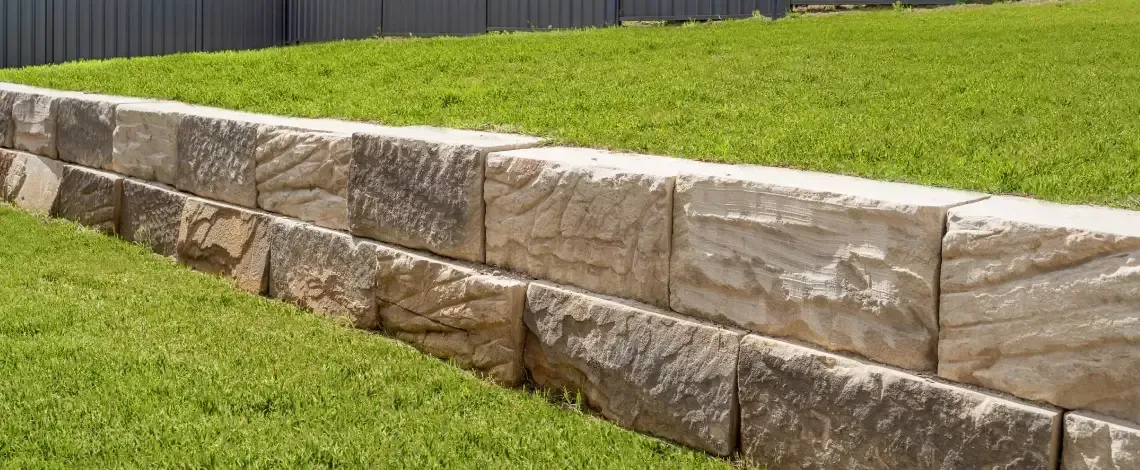
The best material depends on the look you want, the wall height, site conditions, and the amount of structural support required. Natural stone and boulders create a more organic appearance, while modular block provides clean lines and consistent installation options. A professional can help determine which material works best for your property and the wall’s intended purpose.
| Material | Best For | Overall Look |
|---|---|---|
| Natural Stone | High-end landscapes, terraces, and organic designs | Timeless and natural |
| Boulder Walls | Larger grade changes and rustic properties | Bold and textured |
| Segmental Block | Structured walls and modern layouts | Clean and uniform |
| Brick or Veneer Finishes | Coordinating with home exteriors and patios | Traditional and refined |
What Goes Into Retaining Wall Cost in Michigan?
Retaining wall cost in MI can vary because every property has different grade conditions, drainage needs, access points, materials, and wall dimensions. A short decorative planting-bed wall will require a different level of preparation than a structural wall holding back a steep slope. The most accurate estimate comes after reviewing the site, drainage path, and full landscape plan.
Key factors that affect retaining wall pricing include:
- Wall height, length, and number of tiers
- Material selection and finish details
- Excavation requirements and site access
- Drainage and reinforcement needs
- Soil conditions and existing erosion issues
- Added features such as steps, lighting, planting beds, or patios
Why Professional Retaining Wall Installation Makes a Difference
Retaining walls need more planning than they appear to from the finished surface. The wall’s base, drainage, soil pressure, and surrounding grade all affect how well it performs over time. A professionally installed wall is designed to look great while safely and reliably supporting the property.
At
Reynolds & Juett Associates, we create outdoor spaces that integrate hardscaping, drainage planning, planting, pathways, terraces, and other landscape features into a cohesive design. Whether you need to correct erosion, level part of your yard, or build a more functional outdoor living space, we can help create a retaining wall solution that fits your property.
Contact us today to discuss retaining wall installation in West Bloomfield, MI.
Recent Posts