July 1, 2026
How to Fix Drainage Problems in Your Yard: A Homeowner’s Guide to Grading & Excavation in West Bloomfield, MI
Standing water, muddy grass, washed-out mulch, and soggy landscape beds are all signs that water is not draining properly from your property. Yard drainage solutions in West Bloomfield, MI, usually begin with identifying where the water is coming from and why it is collecting in that area. Once the cause is clear, grading, drainage systems, or excavation can help protect your lawn, landscaping, hardscape, and foundation.
Start by Identifying the Drainage Problem
Not every wet area needs a major drainage project. Some issues come from roof runoff or a minor low spot, while others are caused by poor grading across the property. Identifying the water's pattern helps determine the right solution.
Common warning signs include:
- Standing water that remains for more than a day after rain
- Muddy, soft, or bare areas in the lawn
- Washed-out mulch, soil erosion, or exposed roots
- Water flowing toward the home, garage, patio, or walkway
- Puddles around retaining walls or landscape beds
- Settling patios, walkways, or other hardscape surfaces
Why Standing Water Happens in West Bloomfield Yards
Standing water usually means there is no clear route for runoff to leave the property. Rainwater, roof runoff, snowmelt, and groundwater can all collect when the yard is too flat, uneven, compacted, or poorly graded. The longer the water remains, the more likely it is to affect grass, plantings, soil, and exterior structures.
| Drainage Issue | What Causes It | What It Can Lead To |
|---|---|---|
| Low spots in the lawn | Uneven grading or settled soil | Standing water, muddy grass, bare patches |
| Water near the foundation | The yard slopes toward the home | Moisture concerns, erosion, basement, or garage issues |
| Washed-out mulch | Heavy runoff through planting beds | Soil loss, exposed roots, damaged plantings |
| Wet areas beside patios | Poor drainage around hardscapes | Settling, shifting, or water damage |
| Water behind retaining walls | Missing or failed drainage materials | Pressure buildup, erosion, and wall movement |
| Overflowing downspouts | Roof runoff is released too close to the home | Saturated soil and foundation-area drainage problems |
Yard Drainage Solutions for Common Problems
The right yard drainage solution depends on where the water begins, where it collects, and how much water the area receives. Some properties need minor grading adjustments, while others require underground drainage components or excavation work. A professional assessment helps match the drainage solution to the actual issue instead of treating only the visible puddle.
Regrading the Yard
Regrading reshapes the soil, so water moves away from the home and out of low areas. It is often the best option when the yard has shallow depressions, uneven slopes, or areas where water repeatedly settles after rain. Proper grading and drainage in West Bloomfield, Michigan, can also prepare the property for new sod, landscaping, patios, or retaining walls.
Installing a French Drain
A French drain uses a perforated pipe and drainage stone to collect water below the surface and move it to a suitable outlet. It is useful for areas that remain wet or soft even after surface water has disappeared. French drains may be installed near foundations, patios, retaining walls, or persistent wet sections of the lawn.
Adding Catch Basins and Surface Drains
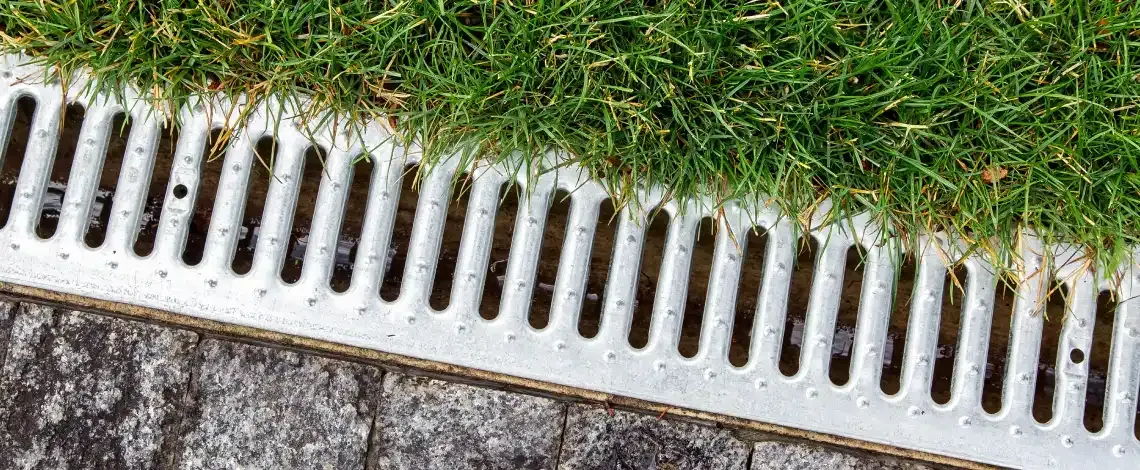
Catch basins and surface drains collect runoff from low points, driveways, patios, and other hardscape surfaces. They connect to underground piping that moves water away from the problem area. This option is helpful when water cannot naturally drain across the property.
Creating Swales or Drainage Channels
A swale is a shallow, graded channel that guides water across the yard. It can be finished with grass, stone, or landscape materials so it blends into the property. Swales are often a practical option when runoff needs a visible but natural drainage path.
Extending or Burying Downspouts
Downspouts can release a large amount of water into one small area beside the home. Extensions or buried drainage lines move roof runoff farther from the foundation, walkways, and planting beds. This is often a simple but important part of a larger yard drainage plan.
Which Drainage Solution May Be Right for Your Yard?
| If You Notice This Problem | A Possible Solution |
|---|---|
| Small puddles in a lawn low spot | Regrading or adding soil to improve the slope |
| Water near the home after rain | Foundation grading and downspout extensions |
| A wet, muddy area that stays soft | French drain or subsurface drainage system |
| Runoff crossing a lawn or landscape bed | Swale, drainage channel, or regraded slope |
| Water pooling on a patio or driveway | Catch basin and surface drain system |
| Soil washing from a slope or wall | Grading improvements and retaining-wall drainage |
When Grading Alone Is Not Enough
Some drainage problems are too severe for a simple grading adjustment. If the yard has major elevation changes, repeated flooding, failing drain lines, or water near the foundation, excavation may be needed. Excavation allows the property to be reshaped and creates room for properly installed drainage systems.
You may need an excavation drainage contractor in MI when:
- Water consistently flows toward the home
- A large section of the lawn stays wet after storms
- Existing drainage systems are not working properly
- Patios, walkways, or retaining walls are settling
- The yard has steep slopes or major low areas
- You are planning a larger landscaping or hardscaping project
Drainage Behind Retaining Walls Matters
Retaining walls need proper drainage to remain stable over time. Water that builds up behind the wall creates pressure that can cause shifting, cracking, erosion, or soil loss. Proper drainage stone, piping, outlet points, and grading should be included in the installation.
A drainage plan is especially important for properties with slopes or elevated landscape areas. It helps protect the retaining wall while directing runoff away from nearby patios, lawns, and landscape beds. Addressing drainage before wall construction can help prevent expensive repairs later.
Why DIY Drainage Fixes Can Create Bigger Problems
Minor maintenance tasks, such as cleaning gutters or extending a downspout, may help with simple drainage issues. However, changing the slope of a yard or installing drain lines without a full plan can redirect water into another part of the property. A quick fix may solve one puddle while creating erosion, oversaturated soil, or runoff problems elsewhere.
Professional drainage planning looks at the entire site, including the slope, soil, home, hardscape, landscaping, and existing drainage paths. This helps create a long-term solution for homeowners who need to fix yard drainage in Oakland County, MI. It also ensures that grading and excavation work support future outdoor improvements.
Fix Yard Drainage Before It Damages Your Property
Drainage problems can affect much more than your lawn. Water that continues to collect can damage landscaping, weaken hardscape bases, cause erosion, and increase moisture near the home. Addressing the issue early can help protect your property and prevent more extensive repairs later.
Reynolds & Juett Associates provides yard drainage solutions, grading, excavation, landscaping, hardscaping, and retaining-wall services for homeowners in West Bloomfield and surrounding Oakland County communities.
Contact us today to discuss grading and drainage solutions for your property.
Recent Posts